
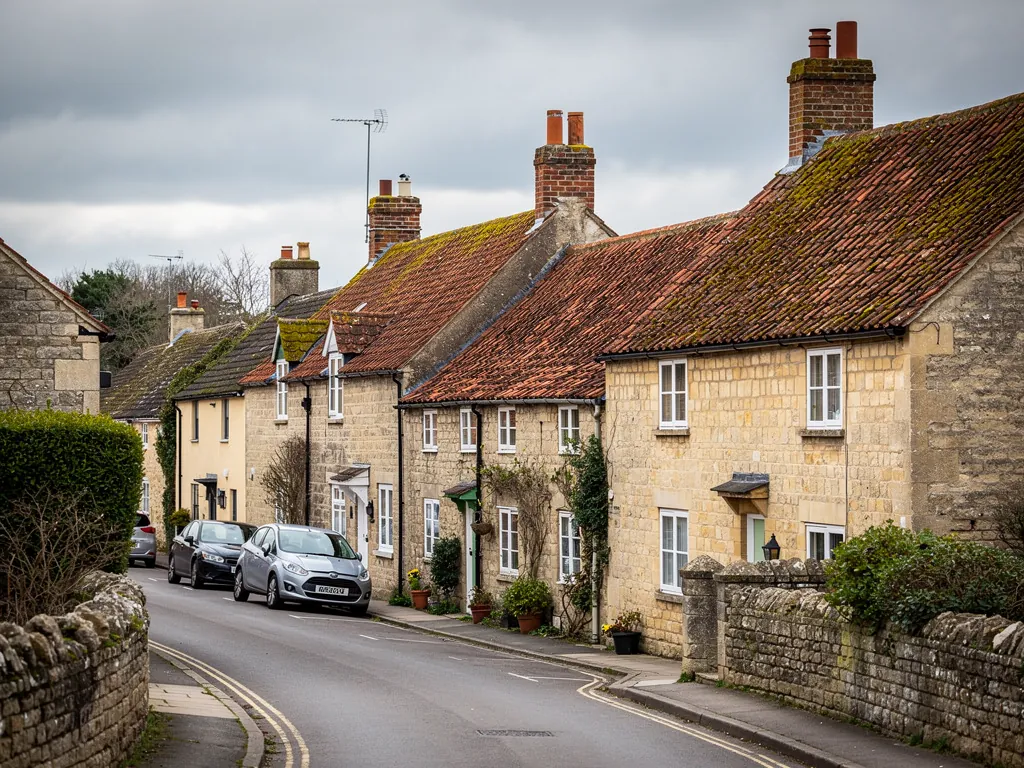


Roofs on the 1669 and 1710 houses
Houses built at the end of the 1600s and the start of the 1700s were put up to last, and their roofs reward careful repair.
The Grange at Hallatrow carries the date 1669, and High Littleton House was built by Thomas Hodges around 1710. A roof from that era is a heavy timber structure, with rafters, purlins and plates cut and jointed by hand. The covering has almost certainly changed since the house was built, but the frame beneath often survives.
That frame is the first consideration in any repair. Old oak is strong, but it can be weakened by long-term damp, by beetle and by earlier alterations. We examine the timber from the loft, working along the roof with a lamp and a probe: the feet of the rafters, where they bear on the wall plate, the joints, any sag between supports and any signs of past leaks. A roof that looks sound from the lane may have a damaged wall plate hidden at the eaves, and the only way to find out is to look from the inside at the lowest point of the slope, where leaks tend to finish up. Where the timber has gone soft, a repair may mean piecing in new oak or fixing a sister rafter alongside the old one, and we describe which in writing.
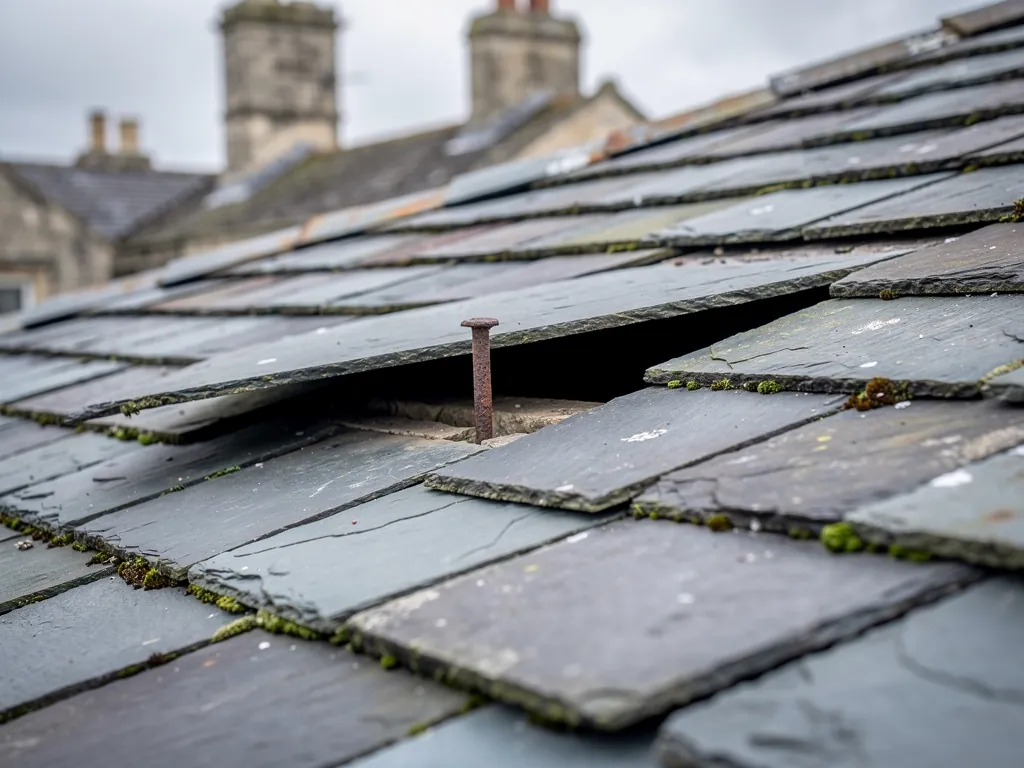
A roof from this period may well have no underlay at all. Rain that gets past a slipped tile or slate lands on the battens (the narrow timbers the covering is hung from) and then drips to the loft floor. Some have sarking, boards fixed over the rafters beneath the covering, which gives a second line of defence. Where boards have been used, we check them for rot; where there are none, we advise on adding an underlay when the roof is re-covered.
The covering itself should match the house. Natural coverings are reused where they are sound, and replacements follow the original in size, colour and texture. Should you plan a different covering, weigh it first: one more than 15% heavier needs approval under the Building Regulations, and the timbers must be checked. Our slate roofing page describes the approach where the roof is slate.