
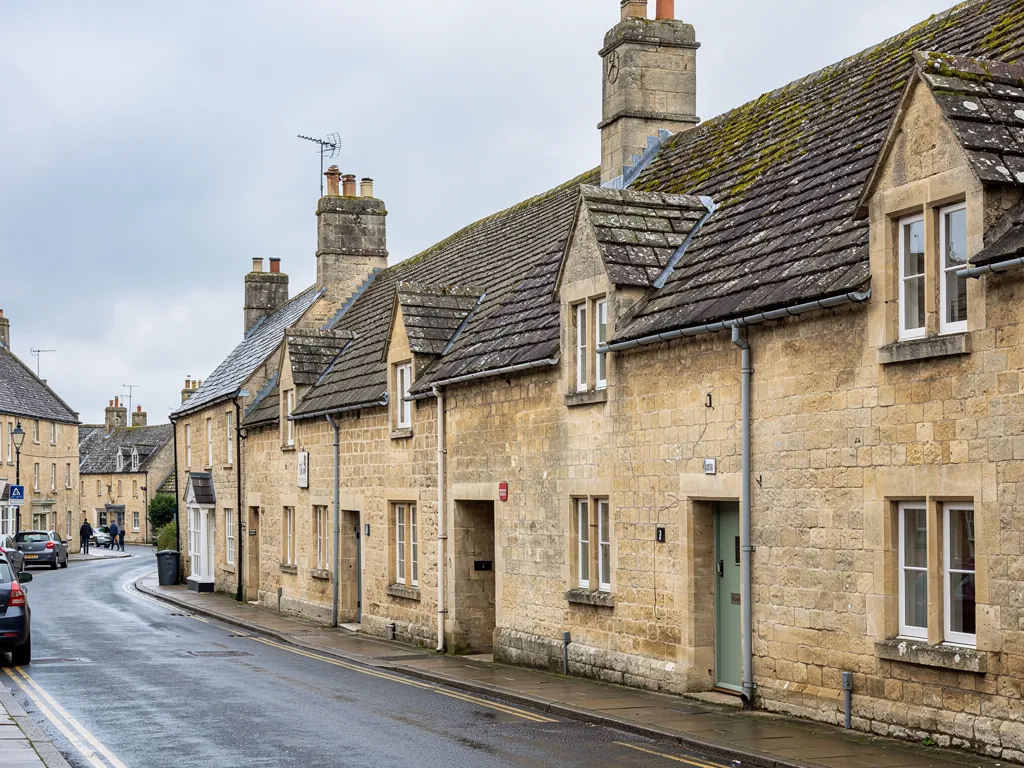
A Cotswold town street of limestone houses with stone tile roofs

Roofers in Cam

Cam lies 27.9 road miles north of Bath, on the edge of the Cotswolds and joined to Dursley. The working mill and its large buildings, the older cottages and the estates still going up on the north-east side of the village all need different roofing, and our crews repair or replace each of them with materials that suit it.

Local roofs

A village built around its mill

Cam is a large village with the size of a small town. The 2011 census counted 8,160 residents in 3,575 households, more than neighbouring Dursley, and the two are contiguous, running into each other without a break. The village sits on the edge of the Cotswolds, and its history is a cloth-making one: Cam Mills is the only woollen mill left in an area that once had many, and it has been manufacturing cloth for over 200 years.

That industrial past leaves a particular kind of roof behind. Mills and workshops are wide, low-pitched buildings with long valleys, rooflights and gutters that carry far more water than a house gutter ever does. Around them sit the homes of the people who worked there, and then the newer ground: the Stroud District Local Plan sets aside a 29.1 hectare site on the north-east edge for development including 450 new dwellings, with construction beginning on Brunel Road in 2016.

So one village gives us three jobs in one postcode area. There is the large roof that needs a plan and a price before anyone can start. There is the older house or cottage where the covering should stay as it was built. And there is the newer roof, where small faults are worth catching before a winter makes them bigger. The medieval Parish Church of St George, south of the village centre, is Grade I listed, which is a reminder that Cam also has old buildings where consent has to be settled first.

Before any scaffold goes up, you get a survey of the roof in question, pictures of what we found and a price on paper.

Council
Stroud District Council
From central Bath
27.9 road miles, north
Listed church
St George, Grade I, south of the centre
Mill
Cam Mills, the only woollen mill left in the area
New housing
450 dwellings planned on the north-east edge

What we find

Mill gutters, flat upstands and young estate faults

Overloaded gutters on large roofsA mill or workshop roof can shed a great deal of water in one downpour. We trace the gutter from one end to the other, testing the slope, the joins and the downpipe outlets, and look for the staining on the wall below that shows where water has been overshooting for a while.
Tired flat sections and upstandsMany large buildings combine a pitched roof with flat sections behind a parapet or around a rooflight. The weak points are the upstand (the short vertical edge at the line where a flat roof butts a wall) and the sealed joints around any opening.
Early faults on newer roofsOn recent estates the problems tend to be small: a ridge tile that has lifted, a verge that has loosened, a strip of underlay torn at the edge. None of these is serious on the day. Each costs less to deal with in autumn than in January.

Mill roofs and large buildings

A roof the size of a car park needs a different plan from a semi-detached house.

Cam Mills has been making cloth for more than two centuries, and the buildings around a working mill have their own roof logic. They are wide, so the roof is a large catchment. They are often low in pitch, so water leaves slowly. And they have been added to over time, which means joins between old and new roof sections, with valleys and abutments where two builds meet. Any one of those joins can be where a leak begins.

When we survey a roof of this kind, we begin with the drainage because it is the system that fails first. The valley is the trough formed where two slopes meet. The box gutter is a hidden channel, lined with lead or a membrane, running between roofs or behind a wall, and because nobody sees it from the ground it is the part most often forgotten. If either one is blocked or split, the water has nowhere sensible to go and finds a way through the fabric.

The second thing we check is what the roof is made of, section by section. A building like this may carry an old slate or tile roof beside a felt flat roof, a profiled sheet roof and a modern single-ply membrane, all laid at different times. Treating it as a single job means a mismatched repair. We write the survey up by section, with photographs, which lets the building manager sort the urgent items from the ones that can wait for a budget.

Commercial work is priced on survey. Our commercial roofing page looks at access, phasing and keeping a building in use during the work, and the flat roofing page covers the membrane options for the flat sections.

The church, the cottages and consent

A Grade I church sets the tone for the older part of the village, and older roofs call for a more careful hand.

The Parish Church of St George, to the south of the village centre, is medieval and Grade I listed. Whether or not your own home is anywhere near it, the older streets of Cam are the part of the village where the covering is most likely to be original, or a careful replacement of the original. That matters, and our habit on such roofs is to restore what was built rather than redesign it.

A listed building has its roof protected along with its walls. Changes need listed building consent, a different permission from planning permission. Here it comes from Stroud District Council, which is also the local planning authority here. St George's itself sits outside that system, since an Anglican church that is still used for worship needs a diocesan faculty for roof work instead. The council's own pages are the right place to start, and you can read its guidance at stroud.gov.uk. A straight swap of like for like may raise little comment. Changing the material, forming a new opening or rebuilding a chimney generally has to be agreed first.

Outside the listings, older houses are simply old, and the same discipline applies. Slate goes back as slate and clay as clay. Lime-based mortar suits soft old masonry and cement does not, so we use lime for stacks and bedding on older walls. Before a single tile is lifted we look at what is under it: the underlay, the rafters and the battens, which are the slim timbers the covering is fixed to. Rot found at the eaves tells you more about the next ten winters than the surface does.

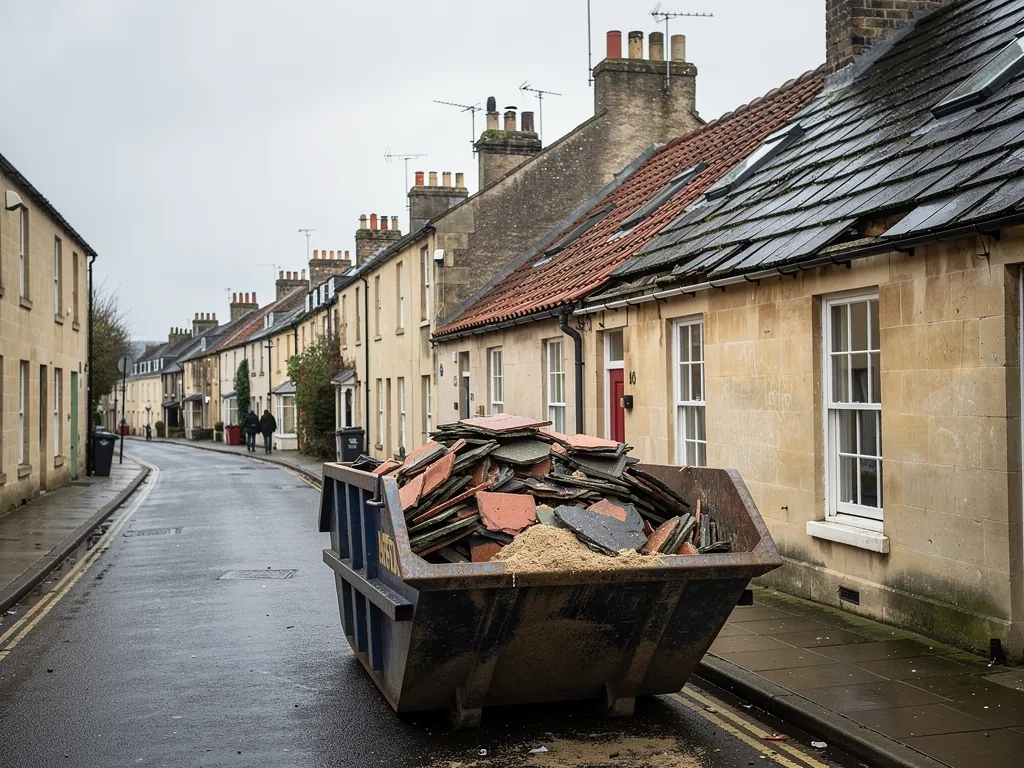
Where a repair is enough, we repair. Where the fixings or timbers have run out, we tell you openly and explain what a re-cover would involve, with the sound material reused where it can be. Our roof replacement page sets out that process from strip to finish.

Repair or re-cover

If the covering is sound and the fault is local, repair it; if the fixings and battens are spent on every slope, strip and re-cover, reusing whatever is still sound.

New estates on the north-east edge

A newly built roof is not a maintenance-free roof, and the early faults are usually small.

The Local Plan allocation on the north-east edge of Cam, with building under way on Brunel Road from 2016, means a good number of roofs here are young. Young roofs fail differently from old ones. The materials are sound, but the details are where problems begin: the junctions, the fixings and the bits of the roof that were finished last or by someone in a hurry.

The first place we look is the ridge and the verges. A verge is the sloping edge above a gable wall. BS 5534, the standard for slating and tiling, no longer trusts mortar on its own to hold the ridge, hips and verges, so a correctly finished roof also carries mechanical fixings. If you can see a hairline crack in the bedding or a tile that has shifted, it is worth having someone look at it, because wind will work at a loose edge until it gives. Our ridge and verge repairs page covers the choices, including a dry-fix ridge held by clips and caps instead of a mortar bed.

Next comes the underlay. This is the layer that catches wind-driven water under the tiles, and at the eaves it ought to drain into the gutter. If it has been cut short or has slipped into the gap behind the fascia, water collects where you cannot see it.

Roofs this young may still be under a builder's or developer's warranty, and we would never suggest anything that put it at risk without telling you. Check the terms before work starts. Where the warranty has ended, or where the fault is clearly outside it, a short repair visit followed by a cleaned and cleared roof is usually all that is needed.

Words you will hear

Verge
The sloping roof edge that overhangs a gable end.
Dry-fix
Ridge and verge pieces clipped on, with no mortar bed.
Underlay
The second line of defence beneath the tiles.
Battens
Cross-timbers that tiles or slates are hung on.

Living next to Dursley: weather and wear

Cam and Dursley sit side by side on the edge of the Cotswolds, and their roofs share the weather that comes with it.

Cam is contiguous with Dursley, and both sit on the edge of the Cotswolds, where the escarpment drops towards the Severn Vale. That has little to do with the postcode and a lot to do with how the weather arrives. Roofs below an escarpment can get rain coming off the high ground and wind funnelled through the gaps between buildings. We cannot give you a rainfall figure, but we can say what that does to a roof: it finds loose fixings and blocked gutters quickly.

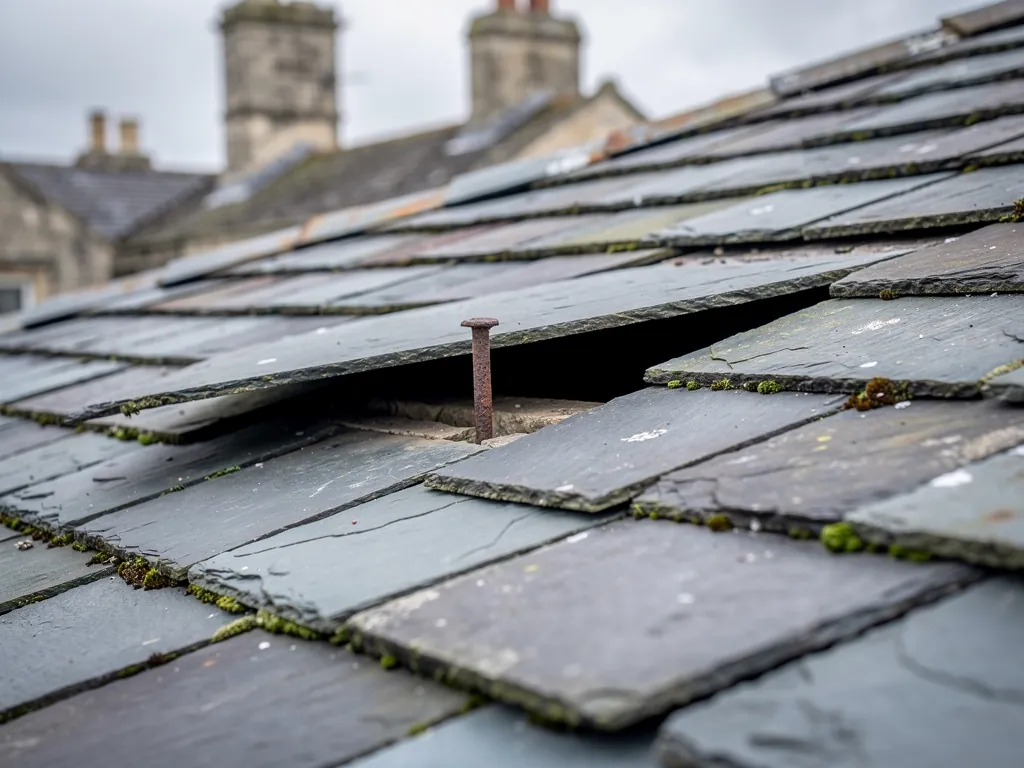
The pattern we see when we are called to a leak is usually simpler than people expect. A slipped tile lets a trickle through to the batten. A cracked flashing (the lead or metal strip dressed over a roof-to-wall or chimney joint) lets it track down inside the masonry. A blocked gutter overflows and soaks the fascia and the timber behind it. Each of these is a small, local fault, and each does more damage the longer it is left.

When water is coming in, the first call is to stop it with a temporary cover or patch, then plan the permanent repair. We prioritise leaks and storm damage. The permanent repair follows, with the cause fixed rather than only the symptom.

If you are claiming on home insurance, many insurers use a gust threshold of at least 55 mph to define a storm, and wear and tear is a common exclusion. A written report and dated photographs help a claim, and we can supply both. No claim is guaranteed to succeed, and the claim itself stays in your hands.

Myth

A roof that does not drip is a roof that is in good condition.

Fact

Water can sit in the underlay, the battens or the insulation for months before a stain appears, which is why a short inspection after a storm is worth more than waiting for a drip.

Map showing the location of Cam.

Nearby

Roofers near Cam

Roofing services in Cam

Local questions

From Cam Mills to the new estates, ask us

Can a roof at Cam Mills be repaired in sections without closing the whole building?

Usually, yes. A large industrial roof is surveyed by section and the work is phased, starting with whichever part is letting water in. The drainage is dealt with early, because a blocked valley or box gutter makes every other repair harder. We agree access, working hours and where materials are stored with whoever manages the site first, and the price in writing follows the survey.

Does the Grade I church mean my house near St George's needs consent for roof work?

Not by itself. The listing covers the church, and any neighbour only if it is listed in its own right. If your house is listed, or you are unsure, ask Stroud District Council before work begins, since unauthorised work to a listed building can be an offence. Our written scope names the covering and leadwork we propose, which gives the council a definite proposal to respond to.

My house is on one of the new Brunel Road streets. Who should I call about a loose ridge tile?

Start with whoever issued your warranty, if it is still running, so you do not lose cover by having someone else touch the roof. If the warranty has ended or does not apply, we can survey the ridge and verges, refix with mechanical fixings and tidy the bedding. A loose tile is a small job when found early.

Do flat roofs on extensions and garages in Cam need to be replaced rather than patched?

It depends on the deck beneath the membrane. If the boards are dry and sound and the fault is a split seam or a failed upstand, a repair can work. Where the deck has gone soft, or the membrane has perished over its whole surface, patching just postpones the job. We open a small area, look at the deck and you will know which category your roof falls into.

Get your free survey

Get your free roof survey

Tell us what's happening and we'll call you back to arrange a visit. Prefer to talk? Call 01225 285181.

  • Photos of your own roof
  • A fixed price in writing
  • 10-year workmanship guarantee
Call Free survey