


Wind on the hilltop
A roof with open ground on several sides has to be fixed as if the wind will arrive, because it will.
Height changes how a roof behaves. On a sheltered street in a valley, a tile can sit loose for years because the air barely moves above it. Up here, the same tile is tugged every time a gust crosses the common. The difference is not dramatic on any single day, but over a winter it adds up, and the first signs are small: a chipped edge, a ridge with a hairline crack in the mortar, a slate that has slipped a finger-width and then stopped.
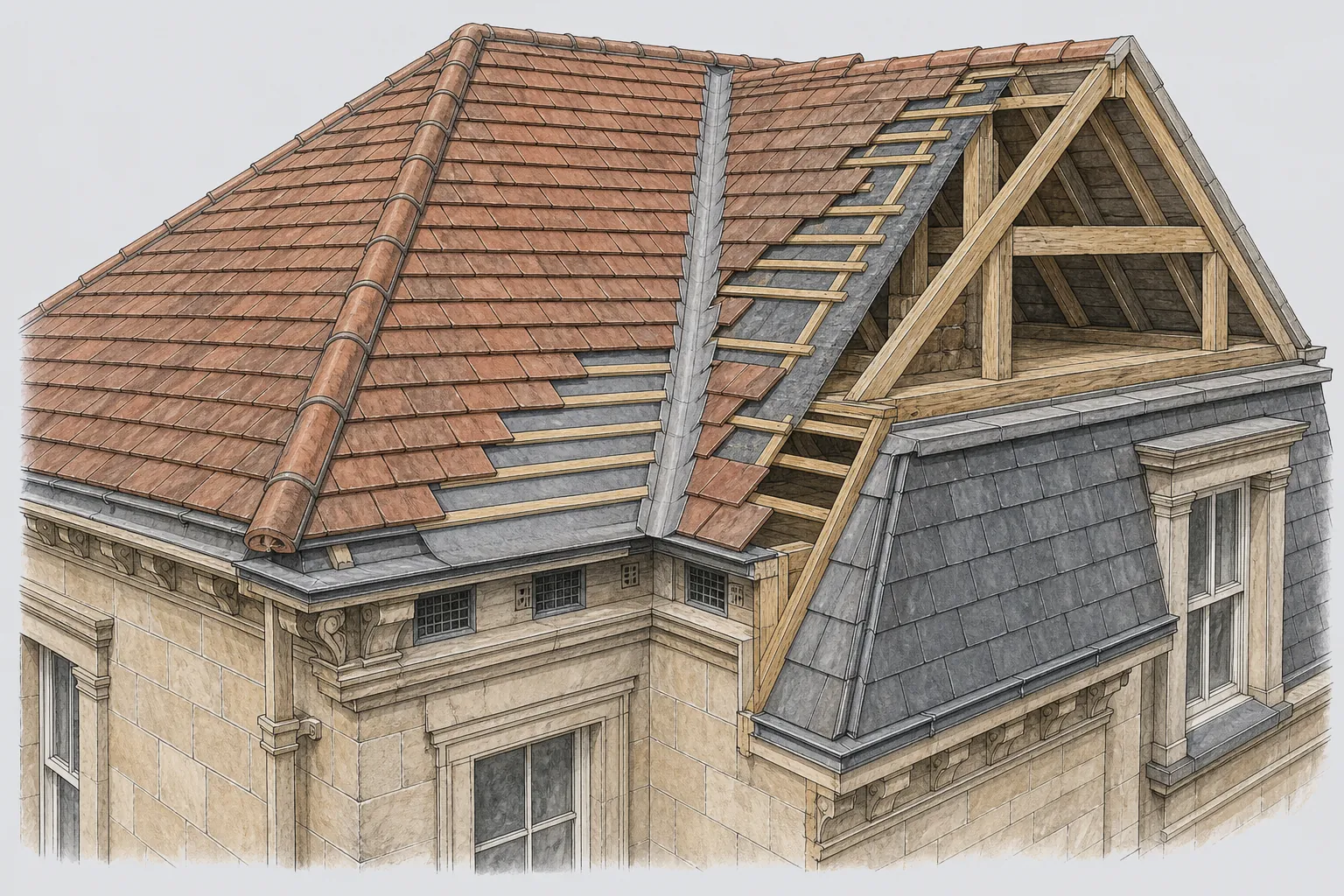
The standard we work to is BS 5534:2014, which governs slating and tiling. Under it, ridge tiles, hip tiles and verges cannot depend on a mortar bed by itself, and a mechanical fixing is expected too. For an exposed hilltop roof that is common sense as much as compliance. A ridge tile held by mortar and nothing else will eventually part company with the roof, and the open question is only whether it happens in a gale.
Where a ridge or verge has failed, we have two routes. The first is to rake out the old bedding, rebed with fresh mortar and add the fixings. The other route is dry-fix, where ridge and verge pieces are clipped on without a mortar bed, a system tested to BS 8612:2018. Dry-fix needs less maintenance and flexes with the roof, so on a high roof it is often the sensible choice. On older roofs with bespoke ridge tiles, rebedding keeps the look. The ridge and verge repairs service sets out both routes in detail.
Beyond the edges, we also look at the field of the roof. Clipped tiles, nibs that have snapped, nails that have corroded: all of these show up as slight unevenness in the lines of the courses. If you can see a roof that does not look quite straight any more, it is worth a closer look before the winter.