



Part 1 of 6
Foam on the slates: what has been sprayed and where
Spray foam bonds to the underside of the roof covering, and that single fact shapes every decision that follows.
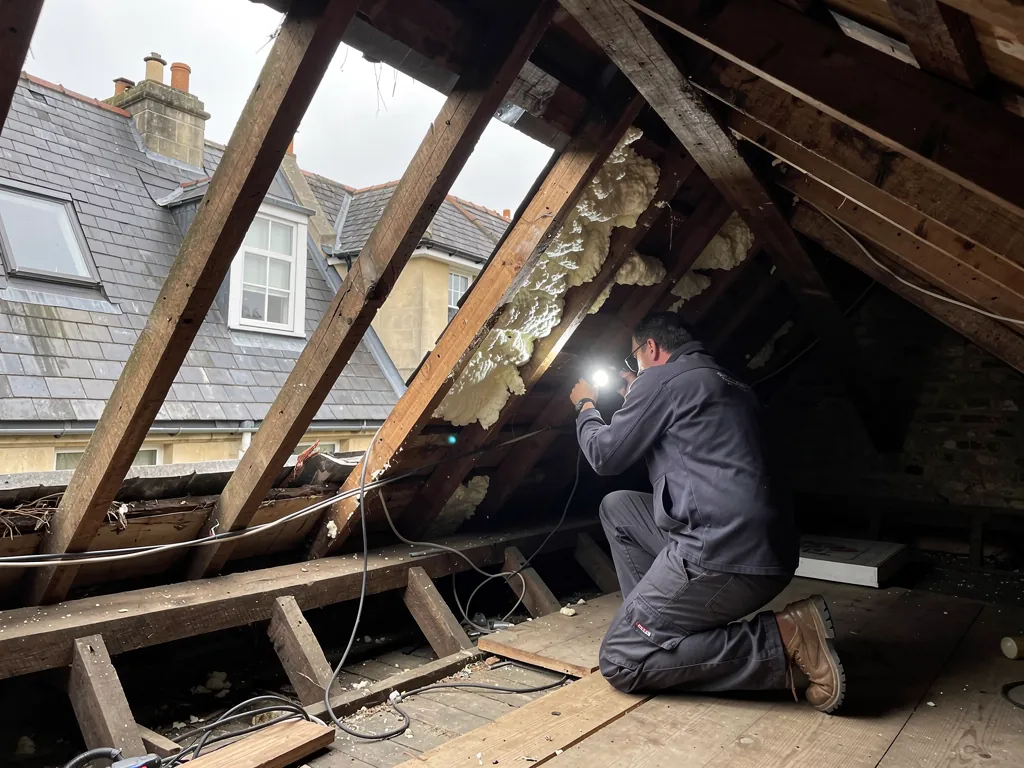
Spray foam insulation is a two-part chemical mix that is sprayed on to the underside of a roof, where it expands and sets. In a pitched roof it is usually applied between and over the rafters, so it clings to the back of the slates or tiles, to the underlay if there is one, and to the timbers themselves. The idea is to insulate and seal the roof in one pass, turning the loft into a warm space. For some roofs, in the right hands, that works. For others it has caused problems that only appear years later, and more owners are now finding out about it when a surveyor writes it up during a sale.
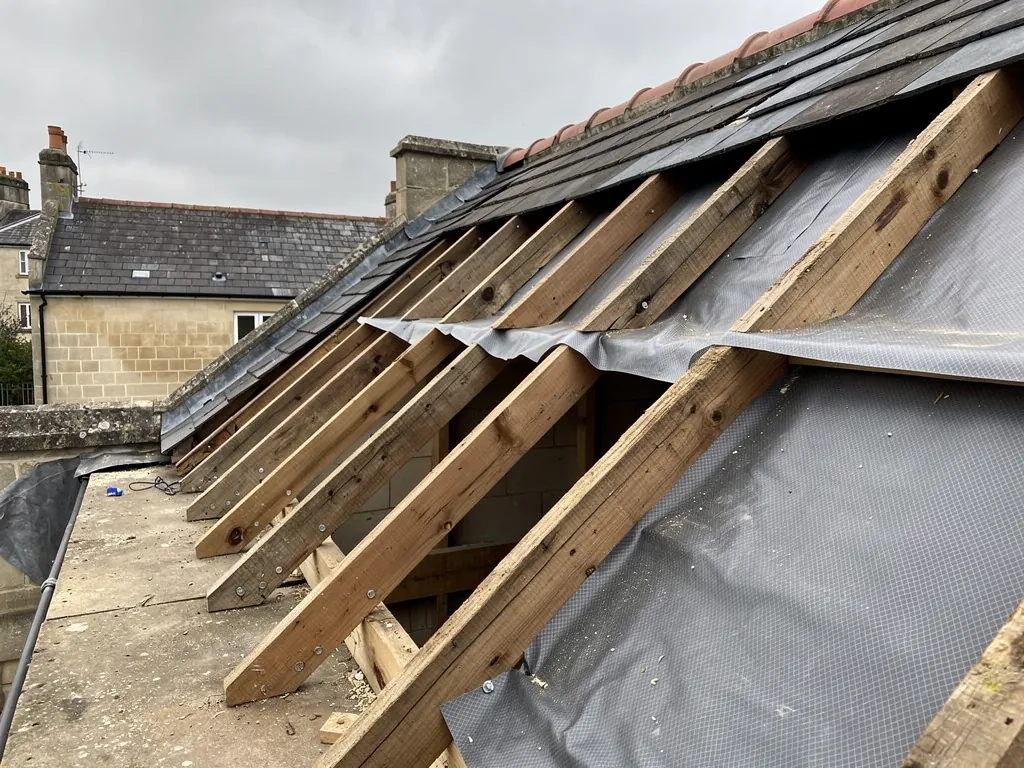
The trouble with foam on the slates is that you cannot see what is behind it. A slipped slate, a rusted nail or a damp batten all sit under a rigid skin of foam, and the foam itself can grip the slate so hard that lifting one risks breaking it. That is one reason we start any job with a careful look at the roof from outside as well as from the loft. Slipped, cracked or missing slates tell us where water may have been getting in, and the foam can hide the staining that would normally give the game away. If your roof is slate, the page on whether spray foam can damage slates and tiles sets out what we look for.
Where the RICS stands
The Royal Institution of Chartered Surveyors published a consumer guide on spray foam in March 2023. It warns of uncontrolled condensation and damage to parts of the property, and it advises owners to check with their mortgage provider whether the lender's policy allows such products to be installed. You can read it on the RICS consumer guide page. Our own page on the RICS position on spray foam explains what the guide says and what it leaves open. It does not say that every spray foam roof is a problem, and neither do we.
Lenders and sales
A BBC investigation reported in November 2024 that some lenders say they will not lend on a property with spray foam in the roof, while others look at each case on its merits. We mention the date because lender policy changes and you should always ask your own lender or broker for the current position. In practice, it is a buyer's surveyor who usually raises the issue, and a sale can stall until it is dealt with. Two pages cover this side in more detail: spray foam insulation and mortgages and selling a house with spray foam insulation.
Removal is a decision, not a default
Whether foam must come out is a question for assessment, not for a slogan. A roof where the timbers are dry, the ventilation is sound and the lender has no objection might be left alone. A roof with damp timbers, trapped moisture or a buyer's surveyor who has flagged a concern is a different matter. Our answer on whether you should remove spray foam insulation goes through how we weigh it up, and there is a separate page on partial removal for owners who want to open up only part of the roof.
Myth
Once spray foam has gone into a roof, the only answer is to rip every scrap of it out.
Fact
Whether it has to come out depends on the condition of the timbers, the ventilation and what your lender and surveyor say, and an assessment settles it.
What matters most is usually what the foam is hiding. In the next chapter we look at the rafters, battens and wall plates beneath it, and how they are checked without wrecking a sound roof.