

Part 1 of 6
Stripping the old covering
How a roof comes off decides how well the next one goes on.
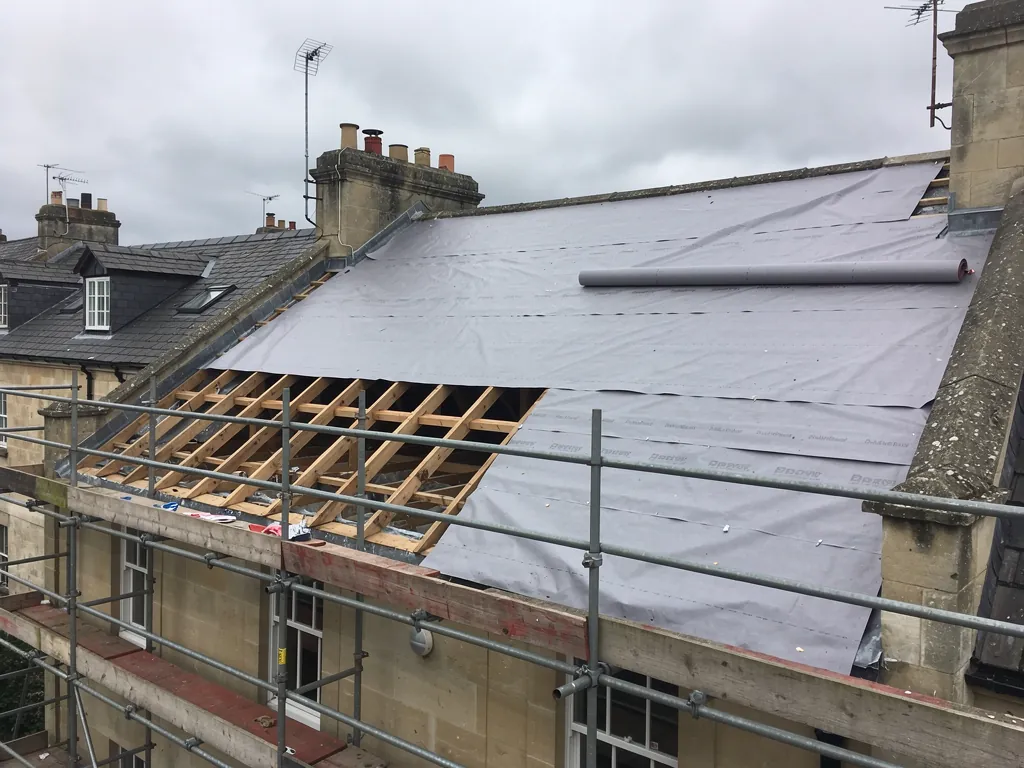
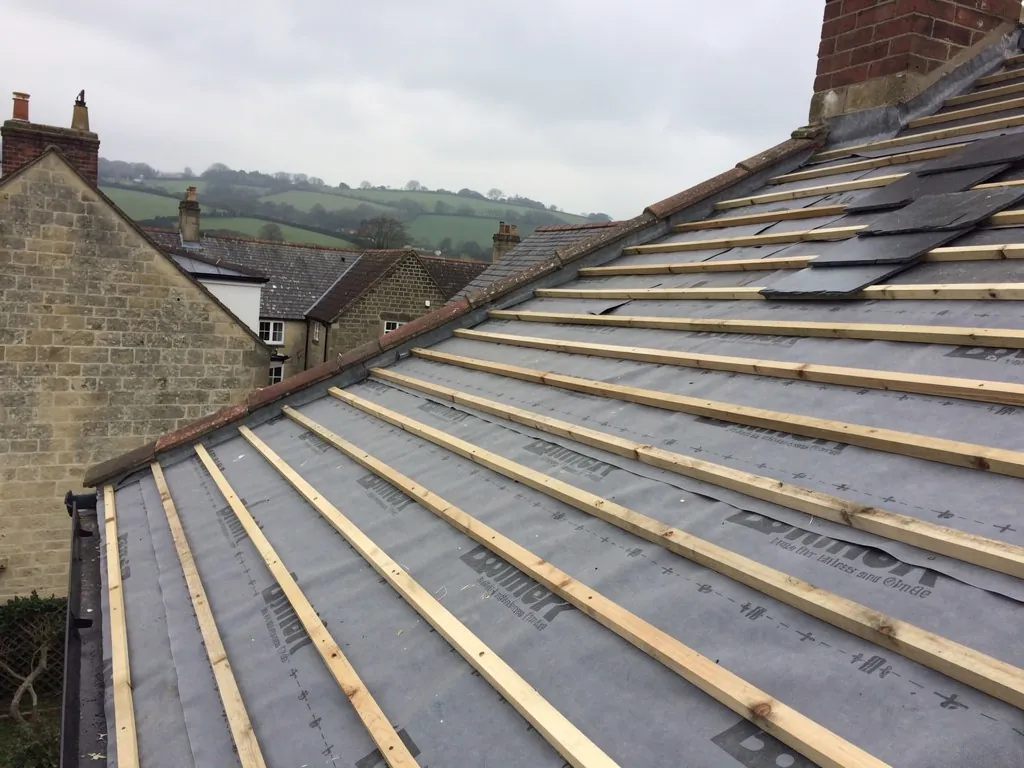
Stripping is the first stage and the one that tells us most. Until the covering is lifted, a roof is a surface. Once it is off, the timbers, the nails, the old repairs and the true condition of the underlay are all on view. A good strip is slow and sorted rather than fast and destructive, and it begins with scaffolding.
Scaffold goes up first, along the eaves and often up the gable ends as well, with a working platform and a toe board so that nothing slides off the edge. It also gives a covered route for waste. The MyBuilder cost guide puts scaffolding at about £1,125 as a typical addition to a new roof, which is a real part of the budget and worth finding in any quote.
Working in stages
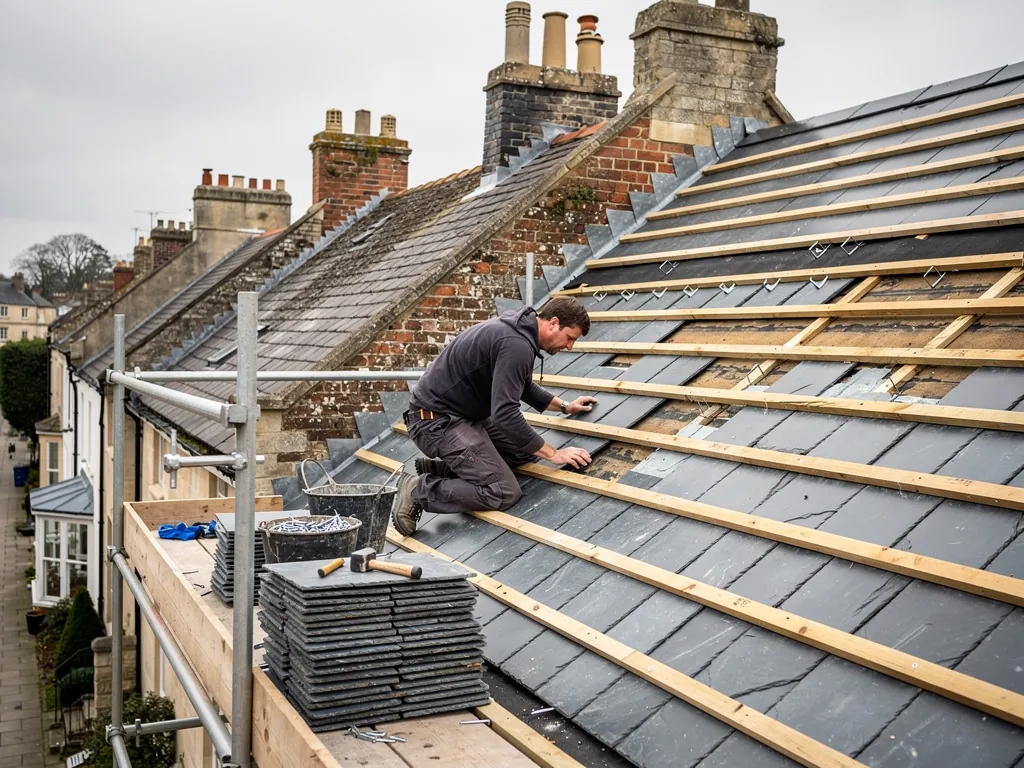
We open a roof in sections that can be made weathertight again before the end of the working day. The first covering to come off is the ridge, then the courses below it, working down the slope. Slates and tiles are stacked by condition as they come off: sound ones set aside for reuse where the roof is going back in the original material, broken ones into a skip.
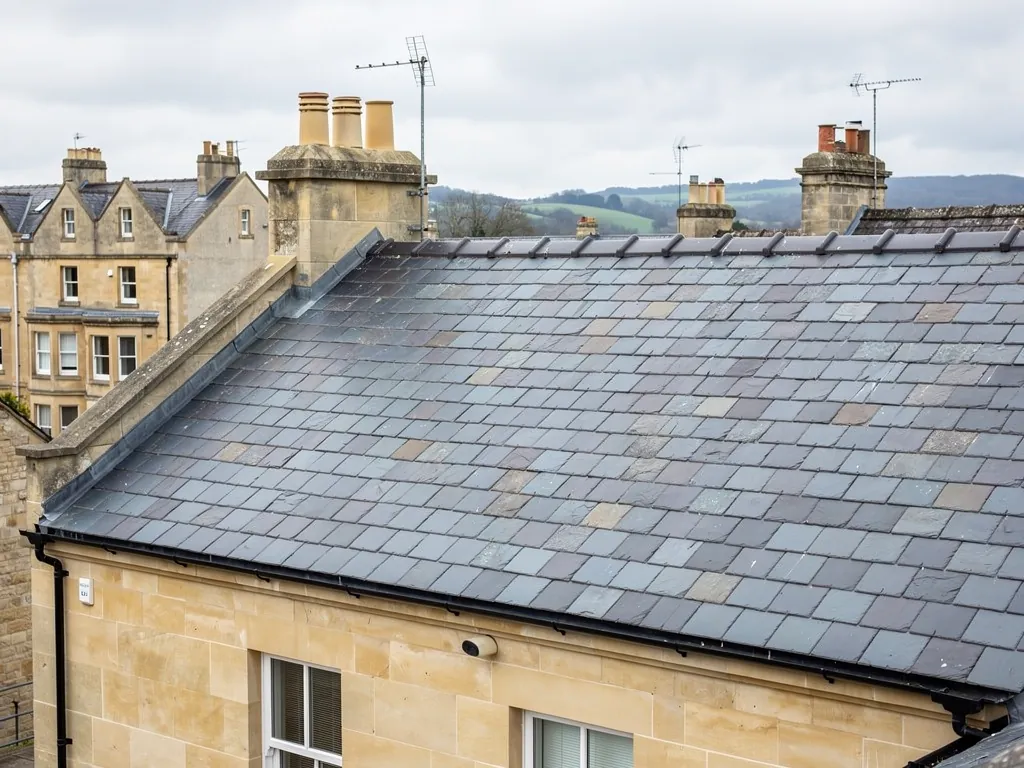
Sorting matters on older Bath roofs. A Welsh slate or a clay plain tile that has weathered for generations may be better than anything new that could replace it, and it is also the best match for the neighbouring roof. Reused material is checked piece by piece for cracks, soft edges and split nail holes. What cannot go back is replaced with something matched to it in size, colour and thickness.
What the old roof tells us
The stripped roof reads like a record. Rust stains around the nail points suggest the fixings have failed across the whole slope. Damp, dark rafters under a failed valley point to long-running water entry. A patch of newer timber shows where someone has dealt with a leak before. We photograph these as they appear, because they decide the timber repairs in the next stage and they let us show you the evidence and not ask for trust on the strength of a description.
Waste and neighbours
Stripping makes noise, dust and a great deal of waste. Chutes or enclosed skips keep debris off your garden and the pavement, and a Bath terrace with a shared party wall needs particular care at the junctions. MyBuilder gives waste disposal as anywhere between £100 and £1,000 depending on the size of the roof and the amount of material, so it is a line to check, not assume. Any lead that comes off is taken away for recycling and not left on site.
Chimney stacks, dormers and roof lights are protected or temporarily supported while the covering around them is stripped. The tidy edge at those points is where the new roof will either keep out the rain or leak, so we treat the opening-up as the start of the detailing and not a separate demolition job.
Words you will hear
- Strip
- To remove the existing covering, battens and underlay down to the rafters.
- Re-cover
- To put a new or reclaimed covering back on the same roof structure.
- Scaffold
- The temporary framework that gives safe access and a working platform at the eaves.
- Reclaimed
- Slates or tiles taken from an old roof, sorted and reused.
Our guide to scaffolding for a re-roof explains why it is priced as it is, and the page on strip and recover takes you through the same stage in more detail. If you plan to stay at home while this happens, read living at home during a re-roof first. Noise, dust and the loss of access to the loft are the three things households notice most, and each can be planned around.